9 Stylish Ways to Design Your Home for Multigenerational Living In 2025
You might not realize that nearly one in five households in the U.S. now includes multiple generations living under one roof. This shift brings unique challenges and opportunities for home design that can enhance family dynamics while respecting individual needs. By understanding how to create spaces that promote both togetherness and privacy, you can greatly improve your home's functionality. What are the essential elements you should consider to achieve a harmonious multigenerational living environment?
Key Takeaways
- Design flexible living spaces with movable furniture and multifunctional areas to accommodate diverse family needs and dynamics.
- Incorporate private areas for family members to recharge, ensuring tranquility away from communal activities.
- Prioritize accessibility by implementing no-step entries, wide doorways, and safety features like grab bars for all ages.
- Use open floor plans to foster interaction and create communal areas that serve as the heart of the home.
- Integrate smart home technology for efficient energy management and enhanced safety, promoting convenience for all family members.
Design Flexible Living Spaces
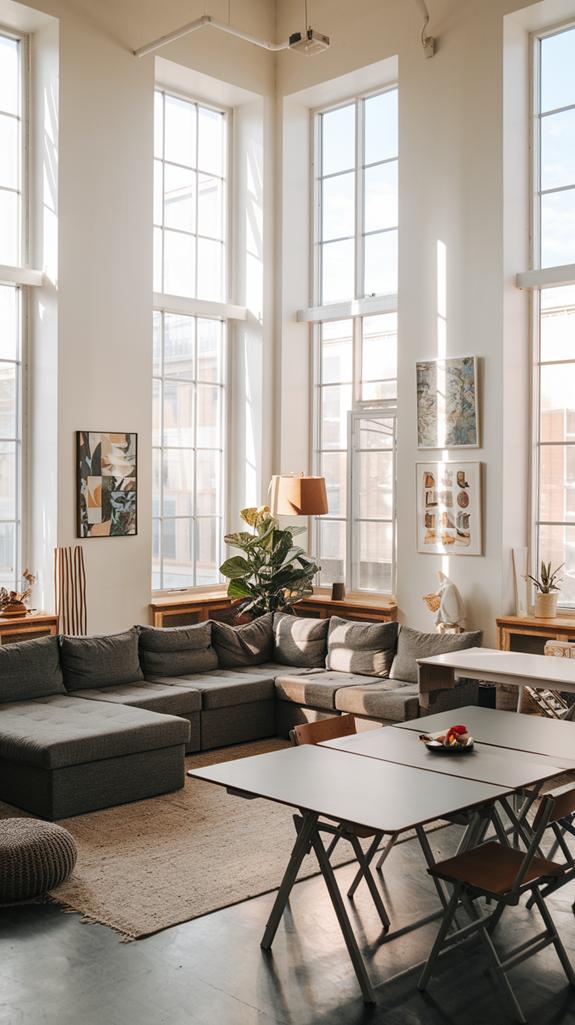
When you design flexible living spaces, you're not just creating rooms; you're crafting environments that adapt to the diverse needs of your family.
Start by considering flexible layouts that can shift as the family dynamics change. Use movable furniture, like modular sofas or nesting tables, which allow you to reconfigure spaces easily. This way, you can transform a cozy gathering area into an open space for larger family events.
Think about shared spaces that encourage interaction while still providing room for personal growth. Open-plan kitchens combined with living areas create a seamless flow, making it easier to cook while engaging with loved ones.
Incorporate multifunctional furniture, such as a dining table that doubles as a workspace, to maximize utility without sacrificing style.
Incorporate smart storage solutions to keep shared spaces tidy and organized. Built-in shelves and hidden compartments guarantee that everyone has their own space for belongings, promoting harmony in communal areas.
Ultimately, your goal is to create a home that's not only beautiful but also a nurturing environment where every family member can thrive, regardless of age or lifestyle.
Incorporate Private Areas

While shared spaces foster connection, incorporating private areas is key to maintaining balance in a multigenerational home.
These private retreats allow family members to recharge and find solitude amidst the hustle and bustle of daily life. Consider transforming an unused room or corner into a cozy reading nook, a small office, or a meditation space.
Designing these areas with thoughtful sound barriers—like heavy curtains or soundproofing panels—can greatly enhance privacy. This guarantees that everyone can enjoy their personal time without the distractions of family activities.
If space allows, you might even create separate entrances or pathways leading to these retreats, further enhancing the sense of personal space.
Prioritize Accessibility Features

How can you create a home that accommodates everyone, regardless of their mobility needs?
Prioritizing accessibility features is essential for multigenerational living. By embracing universal design principles, you can guarantee comfort and ease for all ages, especially as family members age in place.
Here are some key features to take into account:
- No-Step Entries: Design entrances that are easily accessible without stairs, making it simple for everyone to enter and exit the home.
- Wide Doorways: Install wider doorways to accommodate wheelchairs and walkers, providing freedom of movement throughout the house.
- Lever Handles: Replace traditional doorknobs with lever handles, which are easier to operate for those with limited hand strength.
- Grab Bars: Add grab bars in bathrooms and near stairs to enhance safety and support for family members who might need extra assistance.
Use Open Floor Plans

An open floor plan can transform your home into a dynamic space that fosters interaction and connection among family members. By combining the kitchen, dining, and living areas, you create shared spaces that encourage everyone to mingle, cook together, or enjoy a movie night.
This layout eliminates barriers and promotes a sense of unity, making it easy for different generations to spend quality time together. Picture your family gathering around a large island while preparing meals, or lounging in the living room as kids play nearby.
These communal areas become the heart of your home, allowing for conversations and activities to flow seamlessly. You can also arrange furniture to create cozy nooks, ensuring everyone has a place to relax while still being part of the action.
The flexibility of open floor plans means you can customize the layout to suit your family's needs. Whether you want a spacious area for family gatherings or a more intimate setup for quiet moments, you have the freedom to design your space accordingly.
Embracing an open floor plan enhances not just your home's functionality, but also the bonds that tie your family together.
Create Separate Entrances

Have you considered the benefits of creating separate entrances for different generations in your home? This thoughtful design choice not only fosters independence but also enhances privacy.
By providing distinct access points, you can maintain harmony while allowing each generation to have their own space.
Here are four key advantages of separate entrances:
- Privacy: Separate entrances minimize interactions, allowing family members to enjoy their personal time without disturbances.
- Independence: Older relatives can come and go as they please, fostering a sense of autonomy while still being close to family.
- Sound Insulation: With individual entrances, you can better control noise levels between living areas, enhancing comfort for everyone.
- Shared Pathways: When designed thoughtfully, shared pathways can still connect the main living areas without compromising the feeling of separation.
Opt for Multi-Functional Furniture
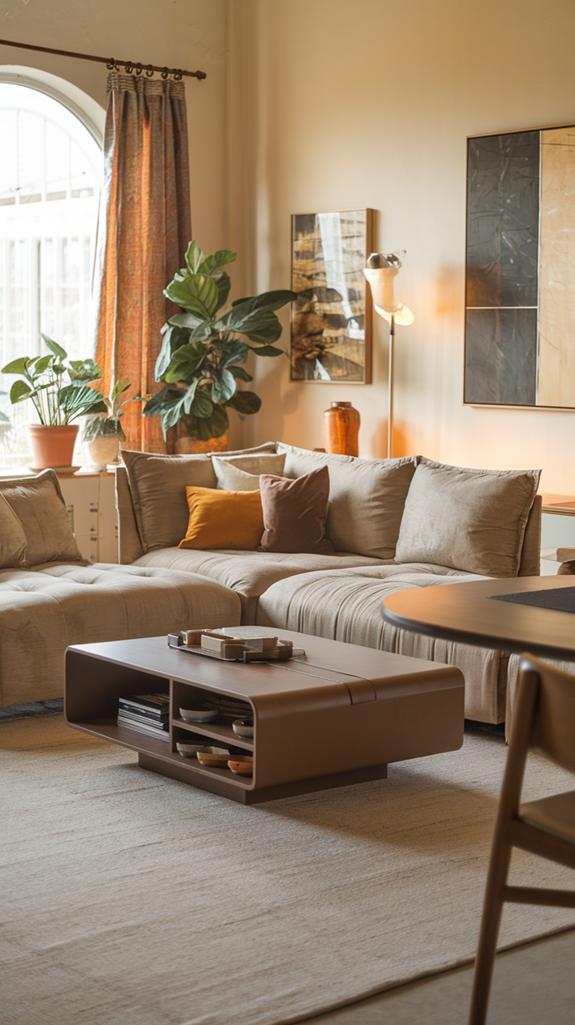
Choosing the right furniture is crucial when designing a home for multigenerational living.
You'll want to reflect on multi-functional pieces that cater to everyone's needs while maximizing space. Look for space-saving solutions that can adapt to various situations, allowing each family member to feel comfortable and at home.
Convertible designs, like sofa beds or extendable dining tables, can transform a room effortlessly. During the day, a sofa can serve as a cozy gathering spot, and at night, it can become a comfortable bed for guests.
Similarly, an extendable table allows you to accommodate family dinners or game nights without permanently taking up extra room.
Storage is another critical aspect. Ottomans with hidden compartments, or coffee tables that double as storage units, can help keep clutter at bay, making your living space more inviting and functional.
Foster Outdoor Connections

While you mightn't think of your outdoor space as an extension of your home, it plays an essential role in fostering connections among family members of all ages.
Designing areas that encourage interaction can greatly enhance the multigenerational living experience. Here are some ways to foster those outdoor connections:
- Create Shared Gardens: Encourage family members to collaborate on gardening projects. It's a fantastic way to bond and share responsibilities, plus you'll enjoy the fruits of your labor together.
- Establish Communal Patios: Design a patio that serves as a gathering spot. Equip it with comfortable seating and a fire pit for evening conversations, making it a welcoming environment for everyone.
- Incorporate Play Areas: If you have younger family members, include spaces for play. A swing set or sandbox can keep them engaged while adults relax nearby.
- Host Outdoor Activities: Plan regular family barbecues or game nights outside. This not only brings everyone together but also creates lasting memories in a relaxed atmosphere.
Establish Clear Zones

Establishing clear zones within your home can greatly enhance the harmony of multigenerational living. By thoughtfully defining areas for different activities, you create spaces that cater to everyone's needs while respecting privacy.
Start with shared common areas, like the living room or kitchen, where family members can gather to foster connections and shared responsibilities.
Next, consider private zones, such as bedrooms and home offices, where individuals can retreat for quiet time or focused work. Use room dividers or furniture arrangement to visually separate these spaces without sacrificing openness.
Think about incorporating multifunctional furniture, like a sofa bed in a den, allowing flexibility for guests or family members. This approach helps in managing family dynamics, ensuring everyone has a space that feels uniquely theirs while still being part of the larger household.
Embrace Smart Home Technology

In today's connected world, integrating smart home technology can greatly enhance the experience of multigenerational living. By embracing smart home integration, you can create a more efficient and comfortable environment for everyone.
Not only does this technology improve convenience, but it also supports energy management, helping you save on utility bills while keeping the home cozy.
Here are four essential smart home features to take into account:
- Smart Thermostats: Adjust temperatures remotely to make sure everyone feels comfortable, regardless of age or preference.
- Home Security Systems: Keep your loved ones safe with smart locks and cameras, allowing you to monitor activity from your phone.
- Voice Assistants: Use devices like Amazon Echo or Google Home for hands-free control over lights, music, and reminders, making daily tasks easier for all generations.
- Smart Lighting: Program lights to adjust automatically or remotely, guaranteeing safety during nighttime trips and creating a warm ambiance.
Conclusion

By weaving these elements into your home design, you create a vibrant tapestry of comfort and connection for every family member. Embrace the harmony of shared spaces while ensuring everyone has their own sanctuary to retreat to. As you blend functionality with style, your home will not just shelter, but nurture relationships across generations. With these thoughtful touches, you're crafting a haven where love and laughter flourish, making every moment spent together feel like a warm embrace.