15 Best Memory Bear Sewing Ideas You Need To Try!
I’ll never forget the moment I held my first memory bear—stitched from my grandmother’s favorite apron, it somehow captured her warmth in a way photographs never could. Since then, I’ve created dozens of these treasured keepsakes, each one transforming meaningful fabrics into huggable comfort. Whether you’re preserving a wedding dress, a child’s outgrown clothes, or a loved one’s military uniform, these fifteen ideas will help you craft something truly extraordinary.
Key Takeaways
- Use diverse fabrics like flannel, denim, baby blankets, hospital gowns, or neckties to create unique memory bears with personal significance.
- Stabilize stretchy fabrics with interfacing and reinforce seams with double stitching to ensure durable, long-lasting bears.
- Preserve original features like buttons, pockets, and garment tags while adding embroidered names or dates for meaningful personalization.
- Join fabric scraps into patchwork panels before cutting bear pieces to incorporate multiple memories into one keepsake.
- Choose beginner-friendly patterns and use sharp needles to successfully sew through multiple fabric layers for professional results.
Classic Teddy Bear Using Children’s Clothing
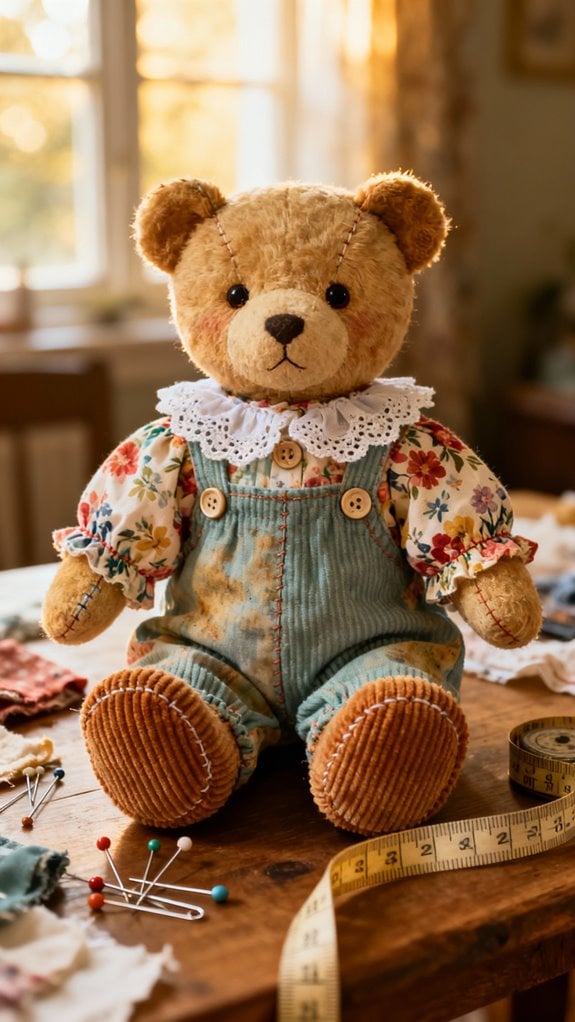
One of my favorite ways to preserve precious childhood memories is transforming outgrown baby clothes into a classic teddy bear that’ll last for generations. I typically gather 6–8 baby items made from cotton, jersey, or flannel, then launder and iron everything before cutting. The key is strategic pattern placement—I love positioning favorite logos or pockets on the bear’s chest or paws for visual interest.
I’ve learned to add interfacing to lightweight fabrics to prevent distortion and always notch curved edges for smooth shaping. After sewing pieces right sides together, I stuff the limbs and head first, then close openings with invisible ladder stitching. When working with stretchy or fraying fabrics, I make sure to line them with interfacing for better stability and easier handling. For personalization, I embroider birth stats on the foot pads and incorporate original clothing labels as unique accents. Additionally, using child-safe closures ensures that your memory bear remains safe for little ones to cuddle with. These 15–22 inch bears become treasured keepsakes.
Vintage-Inspired Bear From Grandparent’s Fabric
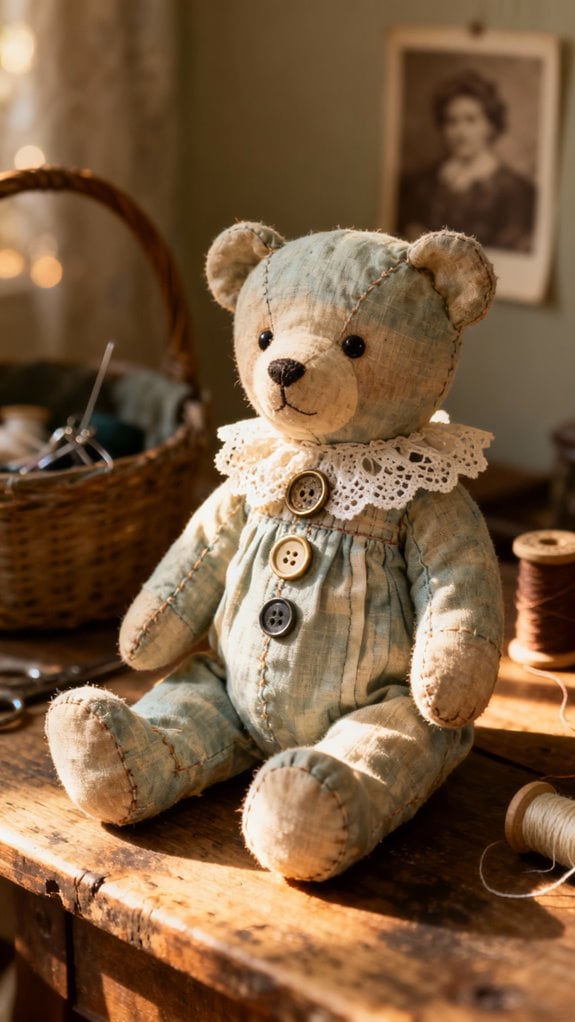
When I first transformed my grandmother’s wool coat into a memory bear, I discovered that vintage fabrics carry stories in every thread—and they create heirloom-quality keepsakes that feel authentically connected to the past.
I’ve found that heavier upholstery fabrics like tweed and corduroy work beautifully, offering durability while showcasing mid-century textile charm. I always add fusible interfacing to stabilize delicate aged materials—it prevents fraying and makes sewing so much easier. Adding iron-on interfacing to all pattern pieces is especially crucial when working with different fabric weights or stretch materials, as it ensures a professional finish for seam techniques.
For construction, I use 50mm and 40mm discs to create classic jointed limbs with authentic movability. I maintain consistent 4mm seam allowances and reinforce seams with double-stitching to protect fragile textiles.
My favorite finishing touches include 14mm glass eyes and embroidered features using perle thread. I’ll often sew in the original garment’s tag, preserving family history within each bear.
Patchwork Memory Bear From Baby Quilts

My daughter’s baby quilt had been tucked away in a closet for years, too precious to discard but too worn for everyday use—until I discovered it could become a patchwork memory bear that she’d actually treasure.
I cut the quilt into small blocks, creating a colorful patchwork effect across the bear’s body. Pre-washing removed years of storage dust, and I reinforced every seam with fusible interfacing to handle the stuffing. The ¼-inch seam allowances kept everything accurate while I clipped curves carefully to avoid puckering. Using minky or fleece fabrics can add a soft texture that enhances the bear’s cuddly appeal.
I assembled the limbs and head first, stuffing gradually for even shape, then closed the final gaps with ladder stitch. Adding embroidered eyes and her birthdate made it deeply personal. The finished bear stood about 8 inches high, perfectly sized for display. Now this bear sits on her bookshelf—a tangible connection to her baby days.
Military Uniform Memorial Bear

The folded flag from my uncle’s funeral sat in my aunt’s closet for three years before she could bring herself to touch his uniform—but transforming it into a memorial bear gave her a way to keep his memory close without the overwhelming weight of loss.
Military uniform memorial bears honor service members by incorporating authentic uniform elements—unit patches, insignia, and medal ribbons—into poseable keepsakes. A standard men’s shirt yields two 12-14 inch bears, while women’s uniforms work similarly. I recommend trial runs with scrap fabric before cutting irreplaceable uniforms. Customizing the bear with different fabrics can enhance the design and personal touch.
These aren’t toys—they’re tributes with non-child-safe components like blown glass eyes and carefully placed badges. Consider embroidering initials on the foot paws or adding a personalized scarf. Custom vests made from uniform fabric add another $25 personalization option to commemorate service details. The patchwork technique works beautifully when fabric is limited, letting you preserve every meaningful detail.
Wedding Dress Keepsake Bear

Your wedding dress doesn’t have to live forever in a box gathering dust—transforming it into a keepsake bear lets you display those precious memories instead of storing them away. I’ve watched countless brides breathe new life into their gowns by creating these adorable heirlooms that actually get enjoyed at anniversaries and family gatherings. To enhance your project, consider exploring bunny sewing ideas that incorporate similar techniques and embellishments.
The beauty lies in preserving those unique details—lace appliqués, delicate beading, embroidered accents—that made your dress special. I recommend using interfacing to stabilize fragile fabrics like satin before cutting your pattern pieces. You’ll find commercial patterns designed specifically for wedding dress bears, many offering different skill levels. These patterns typically create bears standing about 40cm or 16 inches tall, making them a perfect display size for shelves or memory boxes.
Consider personalizing further by embroidering your wedding date or combining fabrics from both the bride’s gown and groom’s suit for an extra meaningful keepsake.
Sports Jersey Memory Bear

Just like wedding dresses hold memories of a special day, sports jerseys tell stories of championship seasons, high school glory days, and cherished athletic moments. I always position my pattern pieces to showcase the player’s number or team logo right on the bear’s chest—it makes such a powerful statement.
Since jerseys are typically polyester or mesh, I stabilize them with fusible interfacing before cutting. This prevents stretching and makes sewing much easier. I use ballpoint needles to avoid snagging the fabric and reinforce seams at joints for durability. Additionally, using durable fabric options ensures that the memory bear lasts for years to come.
My favorite touch? Preserving original details like collar trim or sleeve stripes. These authentic elements deepen the connection to the original garment. Consider adding embroidered dates or team slogans for extra personalization. Patterns like Betsy Bear and Charlie Bear work particularly well for jersey memory bears.
Flannel Shirt Comfort Bear

When my dad passed away, his favorite red and black flannel became my most treasured possession—and eventually, the most comforting memory bear I’ve ever made.
I washed and ironed the shirt first, then carefully positioned my pattern pieces to feature the button placket right down the bear’s belly. Those original buttons mean everything to me now. I kept his chest pocket intact and even preserved the tiny embroidered initials inside the collar. To ensure the bear’s longevity, I also considered using safe closures that would hold up over time.
The soft flannel texture makes this bear incredibly huggable. I reinforced thin areas with interfacing and used a quarter-inch seam allowance throughout. After stuffing gradually with hypoallergenic filling, I hand-stitched the final opening closed. I used a ladder stitch to create an invisible seam for a professional-looking finish.
Now I have something tangible to hold when I miss him most.
Denim Jeans Casual Bear

The weight of my teenager’s outgrown jeans in my hands sparked an idea I hadn’t considered before—these could become something she’d actually want to keep forever. I traced pattern pieces onto flat sections of the denim, avoiding thick seams and hems that would create bulk. The existing pocket became the bear’s belly—instant personality without extra work.
I reinforced seams at stress points with double stitching and snipped curves for smoother shaping. The original contrast stitching highlighted the ears beautifully. After stuffing with polyester fiberfill, I hand-stitched the opening closed using a ladder stitch. Using a jeans needle and strong thread made working through the multiple denim layers much easier. Additionally, upcycling denim not only gives new life to old clothing but also contributes to a more sustainable fashion cycle.
What surprised me most? The denim’s durability meant this wasn’t just a keepsake—it was squeezable, huggable, and strong enough to last decades.
Baby Blanket Nursery Bear

While denim gave me a sturdy bear that could withstand anything, my friend’s request changed my perspective entirely—she wanted something cloud-soft for her newborn’s nursery. I discovered baby blankets make incredibly sentimental memory bears, especially in cotton or fleece.
For my first nursery bear, I used interfacing to stabilize the stretchy material and kept a 6mm seam allowance throughout. The pattern required just four pieces—perfect for beginners! I embroidered her daughter’s name and birth date on the belly, then added a delicate bow to one ear.
The ladder stitch gave me invisible closures, and double-stitching the seams guaranteed durability. These beginner-friendly patterns make it easy to create heirloom-worthy pieces even if you’re just starting your sewing journey. That 40cm bear now sits proudly on the nursery shelf, preserving precious fabric memories while offering comfort for years ahead.
Hospital Gown Remembrance Bear

After my friend’s neighbor lost her mother to cancer, she approached me with a request that stopped me in my tracks—could I transform her mom’s hospital gown into a memory bear? I’d never worked with medical fabric before, but I couldn’t refuse.
I started by washing and ironing the gown, then applied fusible interfacing to stabilize the lightweight material. I carefully positioned my pattern to include the hospital logo and preserved the button placket along the bear’s front. Using a ¼” seam allowance, I stitched the pieces together and hand-embroidered the eyes for safety. The finished bear stood 18 inches tall, a perfect size to hold and hug.
When I delivered the finished bear, watching her clutch it close reminded me why I sew. These bears aren’t just crafts—they’re tangible comfort during impossible grief.
Graduation Gown Celebration Bear

Not all memory bears carry grief—some celebrate triumph. I’ve watched graduates clutch these keepsake bears with tears of joy, their academic gowns transformed into tangible reminders of hard-won achievements.
When you’re sewing a graduation bear, you’ll work primarily with polyester gown fabric. I recommend using sharp needles and lightweight interfacing to make the process smoother. Here’s what makes these bears special: you can incorporate the actual logos, patches, and sash colors from the gown. I love adding embroidered names and graduation years on the bear’s feet.
Consider creating a signature bear where classmates write congratulatory messages directly on the fabric. It becomes an interactive memory that captures not just the milestone, but the community who celebrated it alongside your graduate. You can attach a fabric pen to the bear for convenience, making it easy for guests to sign during the graduation celebration.
Bathrobe Cozy Memory Bear

The softness of terry cloth against your fingertips carries its own language of comfort. I’ve watched clients tear up when they receive bathrobe bears made from a grandmother’s robe or a hospital gown from recovery. These materials hold memories of vulnerable, tender moments.
I recommend starting with the robe’s shoulder seams, pressing them carefully before adding those charming details like miniature collars or tiny belt loops. You can even attach the original tie as a sweet accessory. The waffle weave textures I’ve worked with add wonderful dimension. If you’re looking to create robes for existing stuffed animals, you’ll find that half a yard of fleece is typically sufficient for bears measuring 15-18 inches tall.
What makes these bears special is their dual purpose—they’re both memory keepers and bedtime companions. I’ve seen children clutch them during anxious nights, finding comfort in familiar fabric that once wrapped around someone they loved.
Necktie Professional Memory Bear

While bathrobes whisper of quiet mornings and gentle care, neckties tell stories of boardrooms, first days at work, and celebration dinners. I’ve found that creating a necktie memory bear requires thoughtful planning—you’ll need 3–7 ties depending on your pattern choice.
I always back silk ties with fusible interfacing before cutting; it prevents that maddening fraying and makes sewing infinitely easier. Deconstruct each tie carefully, press flat, and map out your pattern pieces strategically to showcase those beautiful patterns on the bear’s face and belly.
For professional results, I use 4mm seam allowances, double-stitch major seams, and install joints for posable limbs. Those necktie labels? I incorporate them as touching memory accents. The finished bear becomes a sophisticated tribute worth treasuring.
Embroidered Linens Heirloom Bear

Grandmother’s embroidered pillowcases hold stories in every French knot and chain stitch—and I’ve discovered they transform into the most touching memory bears imaginable.
I recommend choosing linens with tight weaves to support the delicate stitching. When I’ve combined multiple pieces—handkerchiefs, tablecloths, even monogrammed napkins—I’ve created patchwork bears preserving entire family legacies in one keepsake.
I always reinforce thin linens with fusible interfacing before cutting my pattern. This prevents fraying and supports the embroidery beautifully. For personalization, I hand-embroider birth stats or memorial dates on the bear’s belly using backstitch.
My favorite finishing touches include vintage buttons for eyes and repurposed lace trim. The tactile details of hand-embroidered linen create heirlooms you’ll treasure for generations.
Multi-Garment Patchwork Bear

When single cherished pieces tell beautiful stories, combining several beloved garments into one memory bear amplifies that emotional impact tenfold. I’ve created patchwork bears using Dad’s work shirts, baby pajamas, and Mom’s favorite dress—each fabric square carrying its own memory.
Start by laundering and pressing your garments, then plan which sections feature logos, pockets, or embroidery you want showcased. I join fabric scraps into larger panels before cutting bear pieces, which maintains seam strength beautifully.
Use fusible interfacing on stretchy or delicate fabrics—this prevents distortion when combining cotton, flannel, and denim. I always double-stitch stress points where different fabrics meet. Existing buttons from shirts can add charming decorative touches to your patchwork design.
The result? A truly unique heirloom that celebrates multiple chapters of someone’s life in one huggable keepsake.
Conclusion
I’ve discovered that making memory bears isn’t just about sewing—it’s about holding onto the people and moments we treasure most. When I completed my first bear from my daughter’s baby clothes, I understood why these keepsakes mean so much. Whether you’re healing, celebrating, or simply preserving memories, I encourage you to pick up that fabric and start stitching. You’ll create something truly irreplaceable that’ll bring comfort for years to come.
