15 Best Kaftan Sewing Ideas You Need To Try!
I’ve been sewing kaftans for years, and I can tell you there’s something magical about creating a garment that’s both effortlessly elegant and surprisingly simple to make. Whether you’re a complete beginner tackling your first three-seam project or an experienced sewist ready to experiment with bold color blocking and zero-waste techniques, I’ve gathered 15 stunning designs that’ll transform your wardrobe. Let me show you exactly how to bring each one to life.
Key Takeaways
- Classic maxi kaftans with side slits and deep V-necklines work perfectly for beach, evening, or loungewear using breathable fabrics.
- Beginner-friendly three-seam rectangle kaftans require only straight stitching and two fabric rectangles for simple construction.
- Creative embellishments like color blocking, beaded details, and pom-pom trim transform basic kaftans into statement pieces.
- Dramatic batwing sleeves and contrast piping add unique design features that elevate kaftans from simple to sophisticated.
- Upcycled bed sheets and zero-waste construction techniques offer sustainable, budget-friendly alternatives while maximizing fabric use.
Classic Maxi Kaftan With Side Slits
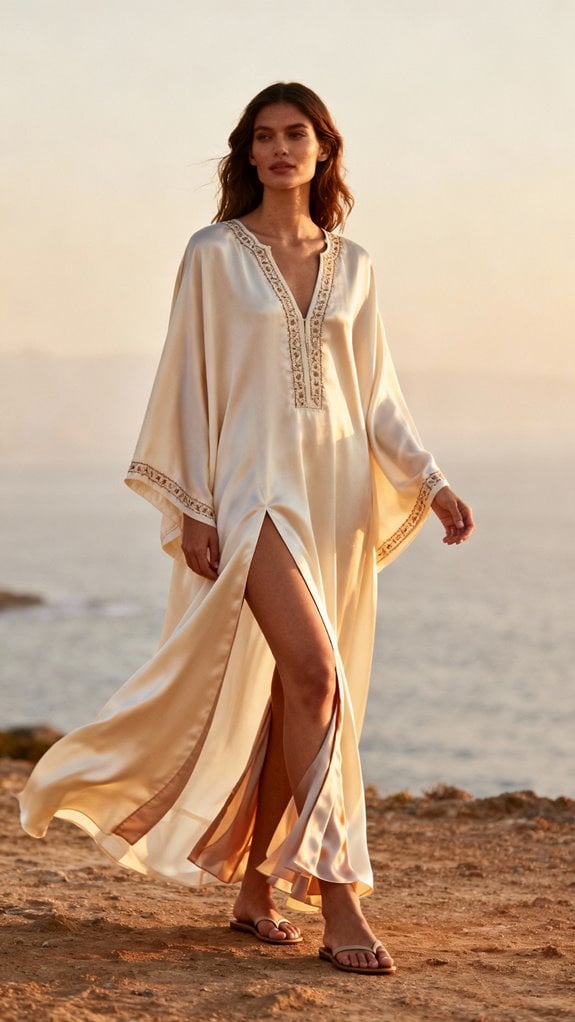
When you’re ready to create a show-stopping piece that balances elegance with everyday comfort, the classic maxi kaftan with side slits is your perfect starting point. I love this design because it’s incredibly versatile—you’ll wear it as beachwear, evening attire, or casual loungewear with equal confidence.
You’ll need 2.5 to 3 meters of breathable fabric like linen or cotton. The deep V-neckline and ankle-length silhouette create a flattering drape, while side slits starting 20 to 50 inches from the hem guarantee easy movement. I always include a detachable belt for optional waist definition. Adding panels or colorblocking can also elevate the design and make it even more unique.
The construction is beginner-friendly: sew side seams up to your marked slit point, reinforce with backstitching, then topstitch edges for durability. Before you begin cutting your fabric, make sure to prewash and iron it to prevent shrinkage and ensure easier handling throughout the sewing process. You’ll achieve a professional finish without complicated closures.
Three-Seam Rectangle Kaftan for Beginners
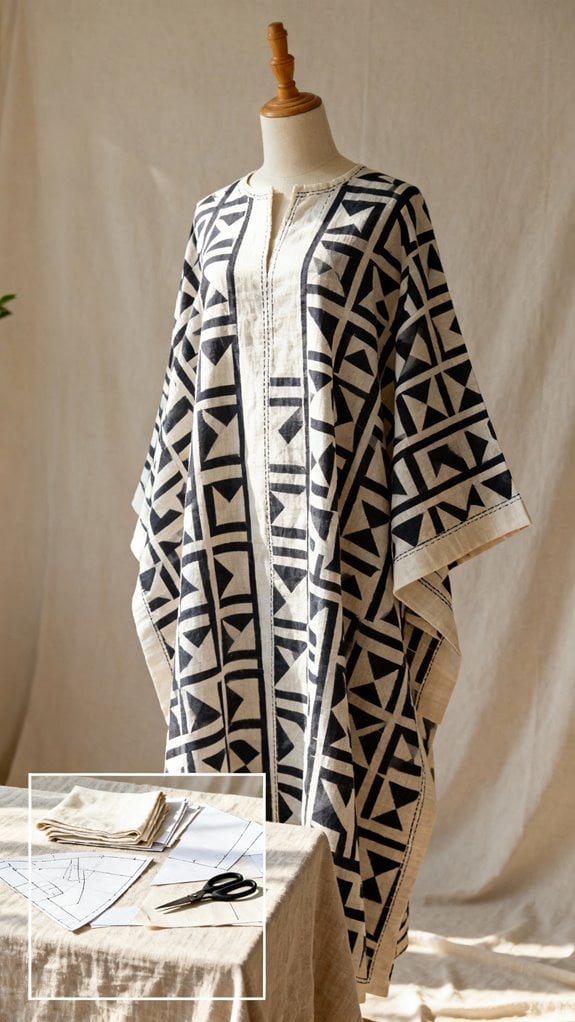
If you’re just starting your sewing journey, the three-seam rectangle kaftan is your ideal first garment project. I love recommending this pattern because it requires only straight stitching—no complicated curves or closures to intimidate you.
You’ll need two fabric rectangles, approximately 45″ x 60″ each. Simply fold to mark your center shoulder line, cut a basic neck hole, then sew two side seams and one shoulder seam. That’s it! Leave 9-12″ open at the top for arm holes and 18-24″ at the bottom for side slits. This straightforward approach allows you to focus on cutting simple straight patterns without feeling overwhelmed.
I’ve seen complete beginners finish this kaftan in under two hours. The loose, flowing silhouette flatters every body type, and you can customize it with decorative trims or an optional belt through simple thread loops. When working with knit fabric, you won’t need to hem any edges since knit fabric doesn’t fray, making your project even simpler. Adding embellishments like lace trims or patchwork can further enhance the design, creating a unique piece that reflects your personal style.
Bold Color Block Kaftan Design

Color blocking transforms the traditional kaftan into a wearable work of art that commands attention wherever you go. I recommend selecting three to four contrasting colors—think pink, green, and black—to create dramatic geometric panels. Silk works beautifully here, offering luxurious drape and sheen that amplifies your color choices.
When constructing your kaftan, plan your seam placement carefully. You’ll want clean, straight lines where colors meet, so use French seams or bias binding to prevent fraying. Consider vertical blocks to elongate your silhouette or asymmetrical panels for an avant-garde edge. Sewists of all levels can confidently tackle this project with the right techniques.
The beauty of this design lies in its versatility. You can wear it casually with sandals or dress it up with heels and metallic jewelry. Choose bright hues for summer or deeper tones for cooler seasons. For those seeking inspiration from colorful prints and patterns, consider exploring handwoven cotton materials that bring authentic texture to your color-blocked creation.
Beach Cover-Up Kaftan With Quick-Dry Fabric
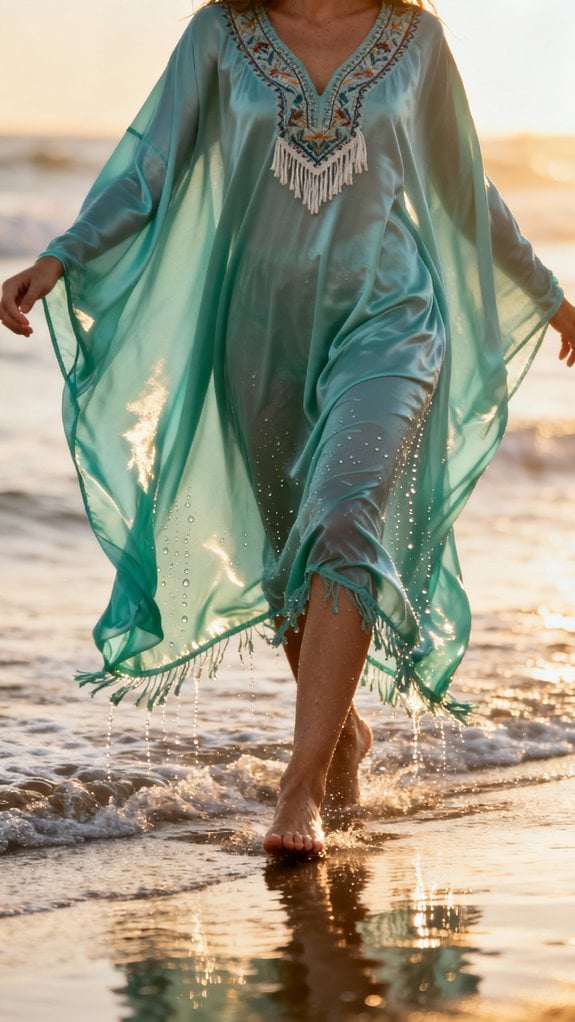
Nothing beats slipping into a breezy kaftan after an ocean swim, and choosing quick-dry fabric makes all the difference between clinging discomfort and instant relief. I always reach for polyester or nylon blends—they’ll dry completely in under two hours while wicking moisture away from your skin. You’ll stay cool even in humidity, and the antibacterial properties prevent that musty beach smell. Additionally, these fabrics are often recommended for comfortable sleepwear because of their excellent breathability.
For my favorite beach kaftan, I use soft polyester blends that drape beautifully while maintaining quick-dry performance. The flowy silhouette flatters every body type and shifts effortlessly from sand to café. If you prefer natural fibers, linen dries remarkably fast, though it wrinkles easily. Microfiber’s ultra-fine construction delivers exceptional softness while remaining wrinkle-resistant, making it perfect for packing in your beach bag.
Machine wash these kaftans without worry—quality quick-dry synthetics maintain their moisture-wicking abilities for at least twenty washes, making them practical and sustainable beachwear investments.
Batwing Sleeve Kaftan Pattern

The dramatic sweep of batwing sleeves transforms a simple kaftan into a showstopping garment that’ll have everyone asking where you bought it.
I start by folding my fabric into four sections, marking my shoulder width from the centerline. The magic happens when I draft that generous curve extending from underarm to mid-thigh—this creates the signature batwing flow. I always use 60-inch-wide fabric to avoid piecing the span.
For construction, I recommend lightweight materials like chiffon or silk that drape beautifully. You’ll need 3–6 yards depending on your desired fullness. I love adding contrasting lace edges to define the sleeves dramatically. Additionally, you can experiment with embellishments like piping to elevate your kaftan’s style.
The key is maintaining that fluid silhouette while joining side seams carefully. Press everything as you sew—it makes all the difference in achieving that professional finish.
High-Low Hem Kaftan for Modern Style

While batwing sleeves add drama through width, I’ve found that a high-low hemline brings modern sophistication through asymmetry. I cut the front hem 4–8 inches shorter than the back, creating a gradual curve that flows beautifully with movement.
I start by sewing shoulder seams, then finish the neckline with bias binding. For the signature hem, I use a double-turn fold—1 inch folded twice—ensuring durability. Lightweight fabrics like cotton voile or rayon challis work perfectly, creating that fluid drape I love. Additionally, choosing the right fabric weights is crucial to achieving the best look and feel for this design.
I recommend adding side vents by stopping stitching 18–22 inches from the hem for easy movement. You’ll need 2–3 yards of fabric depending on your height. I often embellish mine with decorative trims at the hemline, highlighting the asymmetric design that’s dominated summer collections since 2022. Consider choosing fabrics with good drape and weight to achieve the best flowing effect for this high-low style.
Embellished Evening Kaftan With Beading
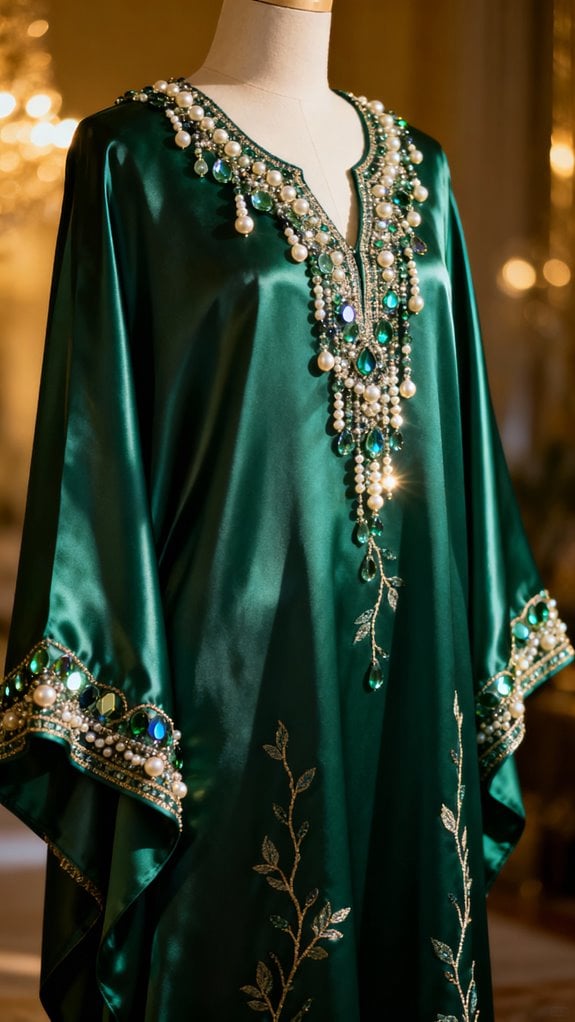
Adding beads to a kaftan transforms it from casual daywear into show-stopping evening attire, and I’ve discovered that a plain fabric yoke provides the perfect canvas for this glamorous upgrade. I prefer crystal beads in sizes four and six because they catch light beautifully and create layered visual interest around the neckline and sleeves.
I always use nylon thread—it’s much stronger than regular sewing thread and prevents bead loss. I secure each bead individually with multiple knots at the beginning and end of strands. Yes, beading is labor-intensive and demands patience, but the spectacular results justify every minute spent.
I customize patterns to suit each occasion, mixing colors and shapes for personalized flair. After beading, I press the kaftan carefully to set everything smoothly and eliminate wrinkles. Incorporating finishing touches like fringe enhances the overall design, providing a unique and stylish finish to your kaftan.
Upcycled Bed Sheet Kaftan Project
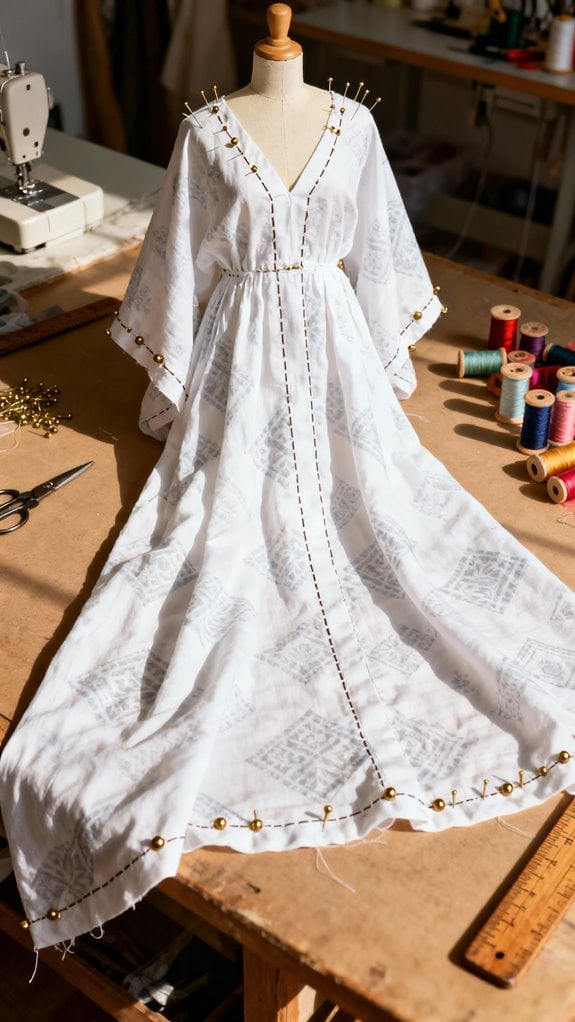
Repurposing old bed sheets into kaftans has become one of my favorite sustainable sewing projects because it’s incredibly budget-friendly and lets me experiment with bold patterns I’d never splurge on at full fabric prices. I always start by washing and ironing my sheet, then folding it in half to cut symmetrical front and back pieces on the fold. A queen-size sheet gives me plenty of fabric to achieve that classic wrist-to-wrist width.
I customize my neckline by trimming a V or scoop shape, then finish all edges with bias tape to prevent fraying. Side seams can be fully sewn or left partially open for vented slits—I prefer the ventilated look. I cut leftover strips into matching sashes, creating adjustable styling options. This zero-waste approach transforms pre-loved linens into stunning loungewear. Additionally, using upcycling old garments techniques can further enhance your sewing projects and minimize waste.
Short Festival Kaftan With Pom-Pom Trim

When I discovered pom-pom trim at my local fabric store, I immediately knew it’d transform a basic kaftan into the perfect festival piece. I cut two rectangle pieces from embroidered cotton silk, then made a conservative diagonal cut at the top fold for the v-neck—remembering it’ll widen when hemmed. After serging the neckline and folding it under, I stitched the top seam with right sides together using a 1/4 inch allowance.
Here’s my trick: I attached the pom-pom trim in separate pieces rather than continuously. This creates crisp corners and prevents bunching at the bottom edge. I used white thread to keep stitching invisible, then sewed 10-inch side seams with backstitching for durability. The result? A versatile piece I’ve worn over bikinis and with tank tops all summer. This design was inspired by an OtterBox phone cover that featured the same vibrant coral pink shade and playful aesthetic.
Deep V-Neck Kaftan With Contrast Piping

Since I started adding contrast piping to my kaftans, they’ve gone from simple cover-ups to statement pieces that get compliments everywhere I go. The deep V-neckline creates an elegant focal point, and I use facings with interfacing to keep it crisp and stable.
I recommend using lightweight linen or cotton as your base fabric. The Seamwork Micah pattern works perfectly for this style. When I add piping, I focus on the neckline and sleeve edges for maximum impact. A piping foot makes installation easier, but your standard presser foot works too.
I always topstitch my piping for durability and that professional finish. Don’t forget to add in-seam pockets—they’re practical and surprisingly easy. This beginner-friendly project delivers sophisticated results every time. The design features center seams and side slits that add both structure and comfort to the finished garment.
Kimono Sleeve Kaftan Variation

The kimono sleeve kaftan ranks among my favorite variations because it completely transforms how the garment drapes and moves. I eliminate the traditional armhole seam by attaching the sleeve directly to the bodice, creating that signature flowing silhouette. I draft my front and back bodice first, removing waist darts and repositioning side darts to the armhole for cleaner lines.
Here’s my process: I extend the shoulder line to my desired sleeve length, then draw a perpendicular line down. The sleeve hem width equals half my total measurement. I create a curved underarm by marking three inches on each side from the underarm point.
For construction, I stitch shoulder seams first, then work through side seams from sleeve top to vent. I always snip the underarm seam allowance to prevent puckering. This style works beautifully with flowy woven fabric, which drapes elegantly and maintains the relaxed silhouette that makes kaftans so comfortable.
Maternity-Friendly Flowing Kaftan
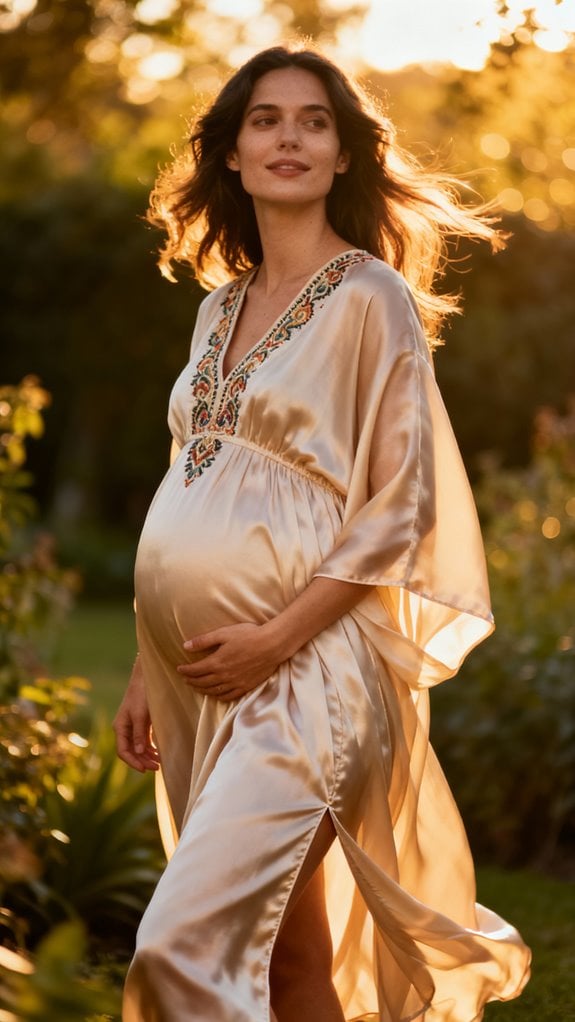
I’ve discovered that creating a maternity kaftan requires thoughtful design choices that’ll serve you through pregnancy and beyond. Start with a deep V-neckline—it’s stylish and perfect for breastfeeding later. I recommend incorporating dolman sleeves for maximum movement and a relaxed fit that accommodates your growing belly.
For fabric, I swear by breathable cotton or lightweight linen. They’ll keep you comfortable through every trimester. Add optional waist ties so you can adjust the fit as needed. Consider choosing jersey with 30-50% stretch for optimal comfort and flexibility as your body changes.
Here’s my favorite tip: include a zippered or tie neckline for easy nursing access. These practical features transform your kaftan from maternity wear into postpartum essential. Most patterns come as PDF downloads with multiple sizing options, and you’ll find beginner-friendly tutorials online to guide you through each step.
Men’s Minimalist Caftan Pattern
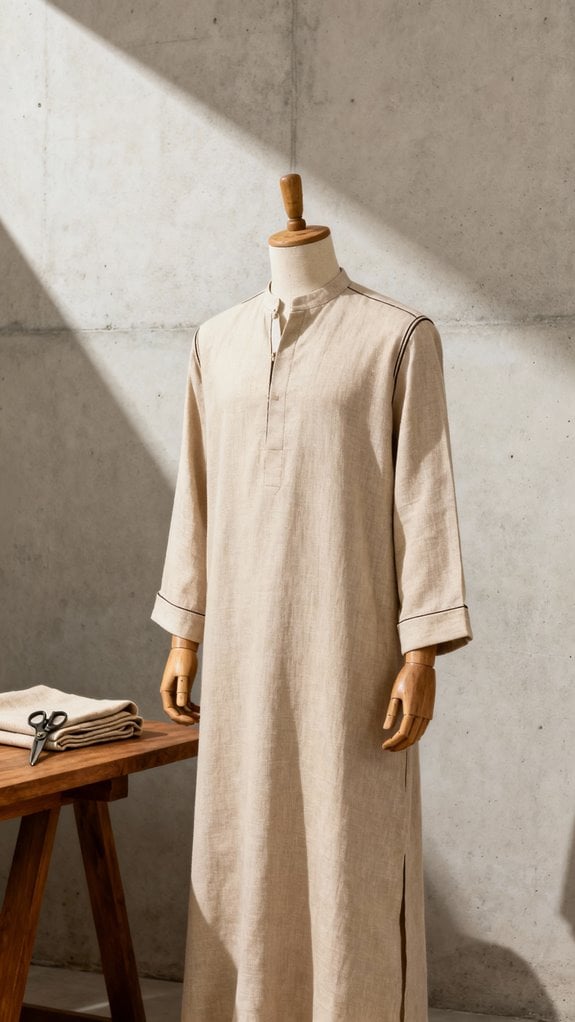
Creating a men’s minimalist caftan is surprisingly straightforward—you’ll need just one or two fabric panels and basic sewing skills to pull it off. I recommend choosing lightweight cotton or linen in solid neutrals like navy or beige for that clean, versatile look.
The straight-cut silhouette emphasizes simplicity while ensuring comfort. You’ll work with loose fit through the body and sleeves, keeping it uncluttered without excessive draping. I typically finish the basic round or V neckline with bias tape for a crisp edge.
Use French seams to enclose raw edges beautifully, and leave side seams open at the hem for easy movement. You’ll need 3-4 meters of fabric depending on length.
This pattern’s beginner-friendly and minimizes waste—perfect for sustainable sewing while creating something truly wearable. The design requires minimal sewing experience, making it an excellent choice for those just starting their garment-making journey.
Asymmetrical Kaftan With Fringe Details

When you’re ready to elevate your kaftan game beyond basics, an asymmetrical design with fringe details delivers that perfect blend of drama and wearability. I recommend starting with lightweight fabrics like linen or crepe that drape beautifully and show off the slanted hemline. Cut your neckline or hem at an angle—one shoulder to the opposite hip creates stunning movement.
The fringe placement matters tremendously. I attach mine after main construction to prevent seam distortion, securing it with double stitching for durability. Ten-inch fringe makes a bold statement, while shorter lengths offer subtlety. Try positioning fringe along the asymmetrical hem where it catches attention with every step.
Don’t forget proper finishing—bias tape on necklines and serged edges guarantee your kaftan lasts through countless wears.
Zero-Waste Kaftan Using Scrap Fabric Panels

Zero-waste kaftan construction transforms fabric scraps into intentional design elements while eliminating cutting room waste entirely. I’ll arrange pattern pieces directly onto fabric, blocking out the largest sections first—front and back panels—then strategically positioning smaller details like cuffs and collars in remaining spaces.
Here’s my practical approach: I’m using three beach towels (70cm x 140cm each) or 2.5-3 yards of 60-inch fabric. The front neckline cutout becomes my back neckline facing—nothing gets discarded. I’ll space pieces just 1/2 inch apart for maximum efficiency.
For construction, I’m serging all seams for clean edges, pressing the back seam open, and cutting ties on straight grain rather than bias. This subtraction cutting method creates a complete garment from continuous fabric with zero waste. The beauty of this design is its one size fits all approach, making it perfect for creating garments that can be shared among family members or passed down through generations.
Conclusion
I can’t wait for you to plunge into these kaftan projects! Whether you’re drawn to the breezy beach cover-up or that stunning color-blocked design, there’s something here that’ll match your vibe perfectly. I’ve found that starting with the three-seam rectangle is a great confidence booster if you’re new to this. So grab your fabric, fire up that sewing machine, and let’s create something amazing together. Your dream kaftan is just a few seams away!