Using a
bedpan effectively starts with choosing the right type for your needs - whether it's a standard, fracture, or bariatric model. You'll need
protective gloves, absorbent pads, and cleaning supplies ready before beginning. Position the patient comfortably with knees bent and back supported, then gently slide the bedpan into place with the curved end up. Always maintain
privacy and dignity throughout the process, and remember that
proper cleaning is crucial. Let's explore each step in detail to guarantee you're providing the best possible care.
Key Takeaways
- Create a private environment by closing doors and drawing curtains before beginning the bedpan placement process.
- Position the patient with knees bent and head slightly elevated, placing a waterproof pad under their hips.
- Slide the bedpan carefully with curved end facing up, ensuring proper placement and patient comfort.
- Provide toilet paper and wet wipes within easy reach, staying nearby to assist if needed.
- Clean and sanitize the bedpan thoroughly with hospital-grade disinfectant after each use, wearing protective gloves throughout.
Understanding Different Types of Bedpans
Bedpans come in several distinct varieties, and choosing the right one can make a world of difference in comfort and effectiveness. You'll find two main types: the standard
fracture pan, which has a contoured design perfect for patients who can't lift their hips, and the
regular bedpan, which works well for most other situations. There's also the
bariatric bedpan, specially designed for larger patients who need extra support and stability. Each type is crafted from either plastic or stainless steel, and they're all
easy to clean and sanitize. Your healthcare provider will help you select the most suitable option for your needs. Proper bedpan use and maintenance falls under healthcare providers'
duty of care responsibilities to ensure patient safety and dignity.
Essential Equipment and Supplies
Before you begin using a bedpan, you'll need to gather several important supplies to secure comfort and cleanliness. Make certain you have
protective gloves,
absorbent pads or towels, toilet paper, wet wipes, and
cleaning supplies ready at your bedside. You'll also want to keep a container of warm water, mild soap, and a deodorizer nearby.
Don't forget to prepare clean linens, a
fresh gown or clothing, and a plastic bag for disposal. Having everything within arm's reach will help you feel more confident and make the process smoother for everyone involved. Remember, being well-prepared guarantees dignity and comfort.
Preparing the Patient and Environment
To guarantee a
comfortable experience, you'll want to create a warm,
private environment for using the bedpan. Close the door, draw any curtains, and adjust the room temperature to secure the patient's comfort. If possible, dim harsh lighting and remove any unnecessary people from the room.
Help your patient into a comfortable position, usually with their head slightly elevated and knees bent. Place a waterproof pad under their hips to protect the bedding, and
confirm they're properly covered with a sheet for privacy. Take time to explain each step you'll take, which helps
reduce anxiety and promotes cooperation.
Compassionate dialogue with patients during hygiene procedures helps alleviate anxiety while maintaining their dignity.
Step-by-Step Guide to Bedpan Placement
Proper bedpan placement involves several gentle, methodical steps that'll help secure both comfort and dignity during the process. You'll find this straightforward guide helpful as you assist your loved one or patient with care and compassion.
| Step |
Action |
Key Reminder |
| 1 |
Position patient on back |
Keep spine aligned |
| 2 |
Bend knees slightly |
Reduces strain |
| 3 |
Lift hips gently |
Support lower back |
| 4 |
Slide bedpan carefully |
Curved end up |
| 5 |
Check placement |
Confirm comfort |
Remember to communicate clearly with your patient throughout each step, and don't rush the process. Your calm, confident approach will help them feel more at ease during this sensitive task.
Consider utilizing
respite care services to take regular breaks from caregiving duties and prevent burnout while maintaining quality care.
Ensuring Patient Comfort and Safety
While using a bedpan can feel intimidating, ensuring your
patient's comfort and safety will make the experience much more manageable for everyone involved. Make sure your patient's back is
well-supported with pillows, and their hips are properly aligned with the bedpan. You'll want to
maintain their dignity by covering them with a sheet during the process.
Keep checking on your patient every few minutes, and don't rush them. If they're experiencing any discomfort, adjust the bedpan's position gently. Remember to have
supplies like wipes, toilet paper, and hand sanitizer within easy reach, making the process smoother and more comfortable. Practicing
deep breathing techniques can help both caregiver and patient remain calm and focused during this intimate caregiving task.
Proper Cleaning and Sanitization Methods
Maintaining a
clean and sanitized bedpan isn't just important - it's essential for
preventing infections and ensuring your patient's well-being. After each use, empty the contents into the toilet and rinse the bedpan thoroughly with warm water. You'll want to clean it with an
approved hospital-grade disinfectant, making sure to reach all surfaces, including the rim and underside.
Don't forget to wear gloves throughout the cleaning process, and be thorough in your sanitization routine. Once you've cleaned the bedpan, dry it completely with disposable paper towels and store it in a
designated clean area until it's needed again.
Common Challenges and Solutions
Using a bedpan can present several day-to-day challenges, but don't worry - there's a solution for every obstacle you might face. Let's explore common issues and their practical solutions to help make your experience more comfortable and manageable.
- If you're experiencing skin irritation, try using moisturizing barrier cream and guarantee thorough cleaning after each use
- When spillage occurs, keep absorbent pads nearby and consider using a bedpan with higher sides
- To reduce odors, empty the bedpan promptly and use deodorizing tablets or sprays
- If positioning is difficult, try adjusting the bed's angle or using positioning aids like wedge pillows
For patients receiving
hospice care, having a therapy animal present during bedpan routines can help reduce anxiety and provide emotional comfort.
Tips for Special Care Situations
Special care situations require unique approaches when using a bedpan, and we'll help you navigate these important scenarios with confidence. If you're caring for someone with
limited mobility, place a foam wedge under their hips to reduce strain. For patients with
dementia, maintain a calm, reassuring presence and use simple, clear instructions.
When helping someone who's had
recent surgery, protect incision sites by supporting their body weight carefully. For
bariatric patients, you'll need a larger bedpan and may want to use side rails for added security. Remember to check frequently for skin irritation in patients who need extended bedpan use.
Best Practices for Patient Dignity
How can we protect our
patient's dignity during bedpan use? It's critical to approach this sensitive task with
respect, empathy, and professionalism. Every patient deserves to feel comfortable and valued during their
care experience.
- Always knock before entering and announce yourself clearly
- Maintain privacy by closing doors and using curtains or screens
- Speak softly and reassuringly, explaining each step of the process
- Give patients as much independence as possible, letting them assist when they're able
Frequently Asked Questions
How Long Can a Patient Safely Stay on a Bedpan?
You shouldn't stay on a
bedpan for longer than 20-30 minutes at most. Extended periods can increase your risk of developing
pressure sores and cause discomfort in your lower back and tailbone. If you're having trouble, try taking slow,
deep breaths to help you relax. Remember, it's perfectly normal if you need a few attempts, and don't hesitate to ask your caregiver for help if you're feeling uncomfortable.
What Temperature Should the Bedpan Be Before Use?
You'll want your bedpan to be
comfortably warm, around room temperature (68-72°F), before using it. I remember helping Mrs. Johnson, who was initially anxious about the
cold metal bedpan. By warming it slightly with warm water and drying it thoroughly, she felt much more at ease. Never use a hot bedpan, as it could cause burns, and avoid cold ones that might be uncomfortable.
Your comfort's important, so take time to get the temperature just right.
Can Bedpans Be Used While Sitting in a Chair?
While you can't use traditional bedpans in a chair, there are special
fracture bedpans and
portable commode chairs designed specifically for seated use. If you need
toileting assistance while sitting, it's best to use these dedicated devices rather than attempting to use a standard bedpan. They're shaped differently and provide better support, stability, and comfort when you're in a seated position. Your healthcare provider can recommend the most appropriate option for your needs.
Is It Normal for Patients to Experience Anxiety When First Using Bedpans?
Just like
butterflies in your stomach before a big event, feeling anxious about using a bedpan for the first time is completely normal. You're not alone - many patients feel nervous or embarrassed at first. It's a new experience that takes some getting used to, but remember,
healthcare workers help patients with this every day. Don't hesitate to
share your concerns with your nurse, as they'll help make you feel more comfortable and confident.
Should Air Fresheners Be Used During Bedpan Procedures?
You shouldn't use
air fresheners during bedpan procedures, as they can mask important odors that healthcare providers need to monitor. Instead, you'll want to focus on
proper ventilation by opening a window or using a fan when appropriate. If you're concerned about odors, it's better to maintain
good hygiene practices, empty the bedpan promptly, and use approved sanitizing products. Your comfort matters, but your health and safety come first.
 Bedpans come in several distinct varieties, and choosing the right one can make a world of difference in comfort and effectiveness. You'll find two main types: the standard fracture pan, which has a contoured design perfect for patients who can't lift their hips, and the regular bedpan, which works well for most other situations. There's also the bariatric bedpan, specially designed for larger patients who need extra support and stability. Each type is crafted from either plastic or stainless steel, and they're all easy to clean and sanitize. Your healthcare provider will help you select the most suitable option for your needs. Proper bedpan use and maintenance falls under healthcare providers' duty of care responsibilities to ensure patient safety and dignity.
 Before you begin using a bedpan, you'll need to gather several important supplies to secure comfort and cleanliness. Make certain you have protective gloves, absorbent pads or towels, toilet paper, wet wipes, and cleaning supplies ready at your bedside. You'll also want to keep a container of warm water, mild soap, and a deodorizer nearby.
Don't forget to prepare clean linens, a fresh gown or clothing, and a plastic bag for disposal. Having everything within arm's reach will help you feel more confident and make the process smoother for everyone involved. Remember, being well-prepared guarantees dignity and comfort.
Before you begin using a bedpan, you'll need to gather several important supplies to secure comfort and cleanliness. Make certain you have protective gloves, absorbent pads or towels, toilet paper, wet wipes, and cleaning supplies ready at your bedside. You'll also want to keep a container of warm water, mild soap, and a deodorizer nearby.
Don't forget to prepare clean linens, a fresh gown or clothing, and a plastic bag for disposal. Having everything within arm's reach will help you feel more confident and make the process smoother for everyone involved. Remember, being well-prepared guarantees dignity and comfort.
 Proper bedpan placement involves several gentle, methodical steps that'll help secure both comfort and dignity during the process. You'll find this straightforward guide helpful as you assist your loved one or patient with care and compassion.
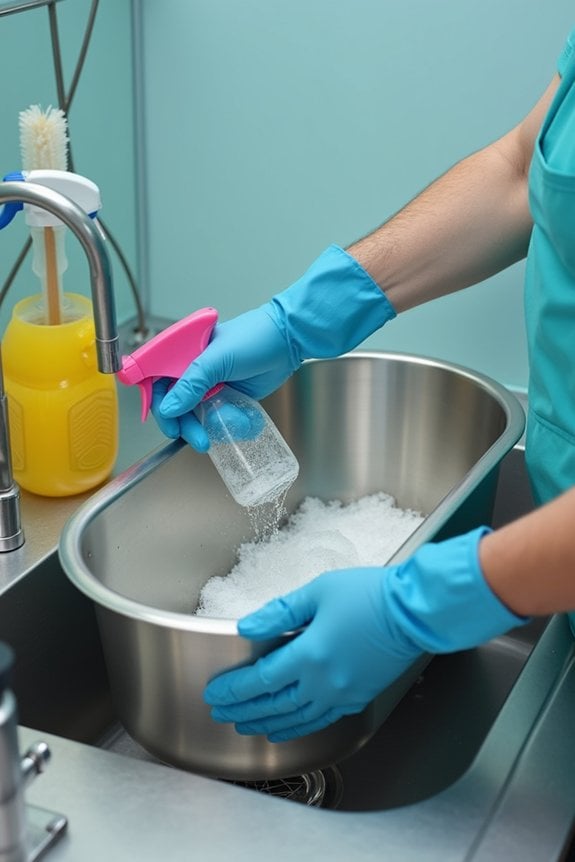 Maintaining a clean and sanitized bedpan isn't just important - it's essential for preventing infections and ensuring your patient's well-being. After each use, empty the contents into the toilet and rinse the bedpan thoroughly with warm water. You'll want to clean it with an approved hospital-grade disinfectant, making sure to reach all surfaces, including the rim and underside.
Don't forget to wear gloves throughout the cleaning process, and be thorough in your sanitization routine. Once you've cleaned the bedpan, dry it completely with disposable paper towels and store it in a designated clean area until it's needed again.
Maintaining a clean and sanitized bedpan isn't just important - it's essential for preventing infections and ensuring your patient's well-being. After each use, empty the contents into the toilet and rinse the bedpan thoroughly with warm water. You'll want to clean it with an approved hospital-grade disinfectant, making sure to reach all surfaces, including the rim and underside.
Don't forget to wear gloves throughout the cleaning process, and be thorough in your sanitization routine. Once you've cleaned the bedpan, dry it completely with disposable paper towels and store it in a designated clean area until it's needed again.