An Expert Guide To Moving House In Later Life
Moving house can feel overwhelming at any age, but it presents a particular set of challenges later in life. From downsizing to simplify daily living to relocating closer to family or finding that perfect retirement spot, the reasons for moving may be exciting, yet the process itself can be daunting. Packing up years of memories, assessing your needs in a new home, and dealing with the physical demands of the move all add to the complexity.
For older adults, limited mobility and the emotional ties to a longtime home can make the decision even tougher. Yet, with the right approach, this transition doesn't have to be a burden. This article will walk you through practical strategies to lighten the load, from selecting the ideal property to simplifying the logistics of the move. Whether you're taking the plunge to downsize or relocating for a fresh start, you'll find tips to help make the experience smoother, easier, and ultimately, more rewarding.

Understanding Your Motivation for Moving
Before making a move, it's crucial to outline your reasons clearly. This step ensures that the new home and location align with your objectives, avoiding the hassle of a future move due to unsuitability. For those considering renovations in their "forever home," be realistic about the scope of work. From the blog Life With Munchers, Pamela Miller shares her experience: "Factor in a realistic timeline and costs of any work... We've been caught out... telling ourselves it's our 'forever' home, but then living in frustration at our lack of patience."
Key Considerations for Your Move - Mobility Issues
For individuals with mobility concerns, the choice of home is critical. Essential features include stair lifts, wider doorways, and spacious rooms to promote independence. Additionally, assess the garden's size and maintenance needs.
Transport Links

For those who don't drive, proximity to public transport, shops, and amenities is vital. Faith, from Much More with Less, advises considering accessibility to these facilities, especially if driving becomes less feasible.
Health and Medical Access

As healthcare becomes a regular part of life, proximity to medical facilities and pharmacies should influence your decision. Easy access to hospitals and local pharmacies can significantly impact daily living.
Proximity to Family

If being close to family is a priority, discuss potential relocation plans with them. It's also important to set boundaries to prevent feeling overwhelmed by family responsibilities, such as childcare.
Downsizing

Moving to a smaller property often makes sense once children have left home. Consider the ideal property size, guest accommodation needs, and how much space your possessions require. This period is also an opportunity for decluttering.
Packing Strategies
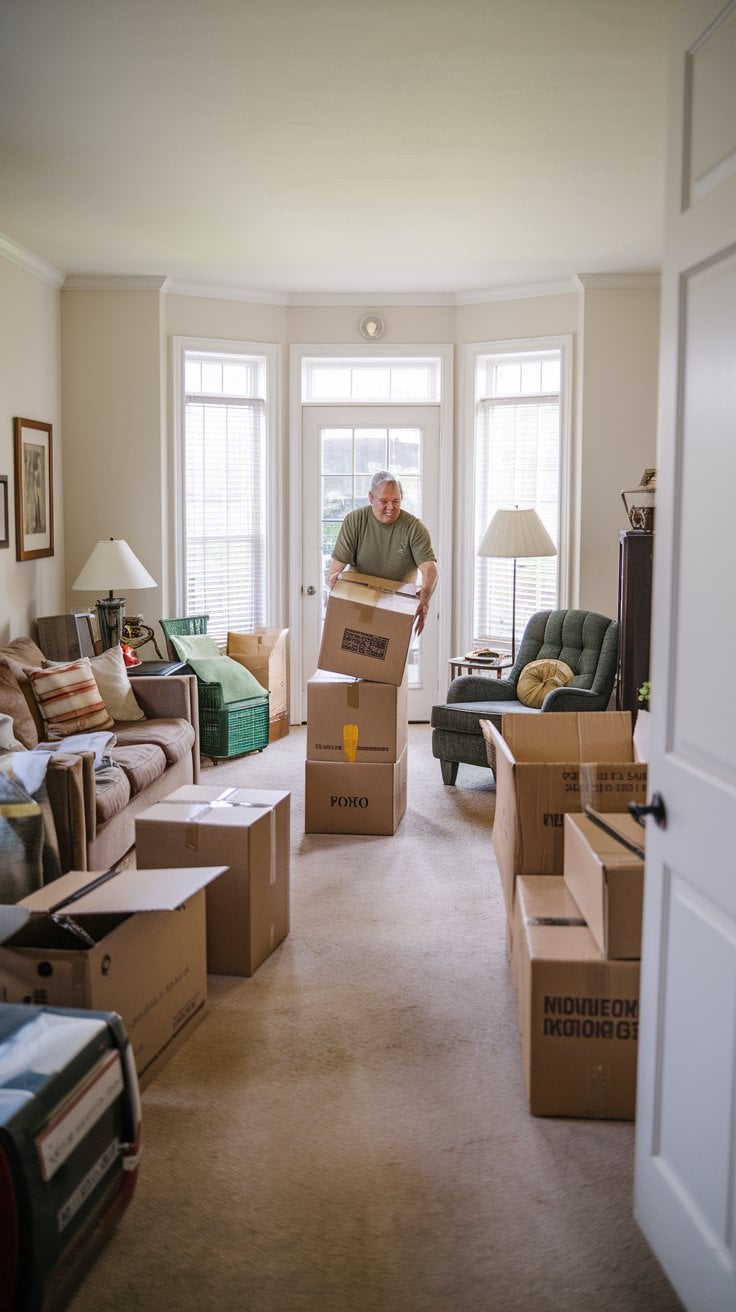
Packing can vary from a well-organized process to a last-minute rush. See this as an opportunity to sort through belongings, deciding what's essential and what can be let go. Effective packing can ease the transition to your new home and lifestyle.
Embracing Realism in Your Move

Assess your new property's size and storage capacity to ensure a smooth transition. Differentiate your possessions into useful, sentimental, and those that don't fit either category. This process helps decide what to keep, what to give away, or what might need a new home.
A move is the ideal time to declutter. Often, larger homes accumulate items belonging to family members, such as childhood toys and other seldom-used items. Returning these items frees up space and simplifies the moving process.
Staying Organized

Every home has that infamous drawer filled with unsorted items or misplaced CDs and DVDs. Before moving, tackle these areas. Organize clothes by season, evaluate musical instruments last used years ago, and make sure everything is in place. This level of organization is crucial; it simplifies locating essential items in the new home and reduces the stress of unpacking.
Communicating with Family

Discuss items they may have stored with you with family members. This is also an opportune moment to discuss larger pieces of furniture that might not fit in the new home. Family heirlooms and treasured items should be offered to family members first, as they might be willing to take them into their homes. This approach preserves family memories and ensures that cherished items continue to be appreciated.
10 Practical Solutions for Older Adults With Limited Mobility To Make Moving Less Overwhelming?

- Start Early and Plan Ahead: Begin the process several months in advance. This allows for a more gradual, less stressful approach to sorting and packing.
- Downsize Thoughtfully: Evaluate what is essential and what can be let go. This reduces the volume of items to move and ensures the new home is not cluttered, which is crucial for mobility and safety.
- Leverage Moving Services: Consider hiring a moving company specializing in assisting seniors. They can handle the heavy lifting and even help with packing and unpacking.
- Organize and Label Clearly: When packing, label boxes by room and contents. This aids in easy unpacking and organizing in the new home.
- Seek Assistance for Decluttering and Packing: Enlist the help of family, friends, or professional organizers. This reduces physical strain and can make the process more enjoyable.
- Choose a Senior-Friendly Property: Look for homes with accessibility features like single-level layouts, no-step entries, wider doorways, and accessible bathrooms.
- Ensure Easy Access to Essentials: During the move, keep a marked box with essentials like medications, important documents, and daily necessities easily accessible.
- Utilize Technology for Property Searches: To minimize physical visits, use virtual tours and online resources to narrow down property choices before in-person visits.
- Plan for Immediate Needs in the New Home: Arrange for the new home to be cleaned and set up with essentials like a bed, chair, and basic kitchen items before moving in.
- Prioritize Safety and Comfort: Ensure the new home is set up for safety and comfort right away, with items like non-slip rugs, grab bars in the bathroom, and adequate lighting.
Conclusion

In conclusion, navigating the process of moving later in life can certainly seem daunting, but with the right approach, it transforms into an opportunity for positive change. Remember, being realistic about your space needs and sentimental attachments is key. Organize diligently, categorizing items to streamline your move and reduce unnecessary stress. Engaging with family members helps declutter and ensures that cherished items continue to be part of your family's story. While the risks of moving include potential physical strain and the emotional challenge of downsizing, the rewards of a well-planned move are immense. You'll find yourself in a space that's not only more manageable but also better suited to this exciting new chapter in your life. With these tips and careful planning, you're well-equipped to make this transition a smooth and rewarding experience. Stay informed, stay motivated, and embrace the journey ahead confidently and optimistically.
Useful Links To Learn More
- Age UK - Moving home in later life: Offers practical advice on preparing for a move, including how to manage finances and emotional aspects.
- The Elderly Accommodation Counsel (EAC): Provides free guidance on housing options for older people, including sheltered housing, retirement homes, and care homes.
- Homeowners Alliance - Downsizing: A guide focused on the benefits and challenges of downsizing in retirement, with tips on how to make the transition easier.
- MoneyHelper - Managing your money in later life: Advice on managing finances and budgeting when planning a move, including considerations for care needs.
- Citizens Advice - Housing options: Explains different housing options for seniors, with practical steps for moving and understanding legal responsibilities.
- Moving Home Advice for Over 60s - Saga: A detailed guide from Saga aimed at older people considering relocating, with tips on reducing stress during the move.
Feature image via Unsplash