20 Amazing Butterfly Garden Ideas You Need to See
Transform your backyard into a butterfly paradise with simple yet enchanting garden ideas. You'll want to start by planting clusters of native flowering plants in vibrant purples, pinks, and yellows. Include a sunny feeding station with sugar water and fruit slices, create shallow puddling areas for water and minerals, and add cozy shelters with dense shrubs and trellises. These butterfly-friendly features will attract countless winged visitors, and there's so much more to discover about creating your perfect butterfly sanctuary.
Key Takeaways
- Create a butterfly-shaped garden layout with colorful flowering wings, stepping stone paths, and a water feature centerpiece.
- Plant clusters of bright purple, pink, and yellow flowers like zinnias, lantana, and butterfly bush in groups of 5-7.
- Install a feeding station with sugar water, colorful sponges, and overripe fruit slices in the sunniest garden spot.
- Design curved pathways with comfortable seating areas for butterfly watching, keeping identification guides and binoculars nearby.
- Include native plants like milkweed and coneflowers, ensuring both adult butterflies and caterpillars have necessary food sources.
Choose Native Flowering Plants for Maximum Appeal

When planning your butterfly garden, choosing native flowering plants is one of the most rewarding decisions you'll make. Native plants naturally attract local butterfly species because they've evolved together over thousands of years. You'll love watching monarchs flock to your milkweed, and swallowtails dance around your native asters and coneflowers. Creating asymmetrical design elements can add visual interest while maintaining the natural flow butterflies prefer. Start by researching which butterflies are common in your area, then select flowering plants they prefer. Don't forget to include plants that support both adult butterflies and caterpillars. Local garden centers and butterfly conservation groups can help you choose the perfect native plants for your region.
Create a Sunny Butterfly Feeding Station

Since butterflies love basking in warm sunshine, you'll want to set up your feeding station in the sunniest spot of your garden. Place a shallow dish or butterfly feeder filled with sugar water (one part sugar to four parts water) on a sturdy platform about three feet off the ground.
Add some bright orange, red, or yellow sponges to your feeding station, as these colors attract butterflies and give them a safe place to land. You can also include overripe fruit slices, like oranges or bananas, which butterflies adore. Remember to change the sugar water every few days to keep it fresh. Consider incorporating your butterfly feeding station into a larger sensory garden space where children can observe these beautiful insects up close.
Design a Colorful Nectar Buffet

Creating a vibrant nectar buffet for butterflies starts with three essential flower colors: purple, pink, and yellow. Plant clusters of butterfly bush, zinnias, and lantana to create an irresistible feast for your winged visitors. You'll want to arrange these blooms in tiers, with taller plants at the back and shorter ones in front.
Mix in some reliable nectar favorites like cosmos, marigolds, and verbena to keep the buffet stocked throughout the season. Don't forget to include different flower shapes, from tubular to flat-topped blooms, as butterflies have varying proboscis lengths. Your colorful buffet will soon become a favorite dining spot for local butterflies. Consider adding sustainable planting methods to ensure your butterfly garden thrives year after year while supporting local ecosystems.
Install a Shallow Water Feature

Beyond filling their bellies with sweet nectar, butterflies need a place to quench their thirst and cool off. Creating a shallow water source doesn't have to be complicated - you'll find that a simple butterfly puddling station works perfectly.
Place a shallow dish or saucer in a sunny spot, fill it with sand or gravel, and add just enough water to make it damp. You can also add a few flat stones where butterflies can perch and bask. For extra appeal, sprinkle a pinch of salt on the wet sand, as butterflies love mineral-rich puddles that help them stay healthy and hydrated. Consider surrounding your puddling station with rustic wooden elements to create a more natural, forest-like setting for your garden visitors.
Plant Host Species for Caterpillars

While flowers provide nectar for adult butterflies, you'll need to plant specific host plants that support their caterpillars' growth and survival. Choose native plants like milkweed for monarchs, dill and parsley for swallowtails, or passion vine for fritillaries. These host plants aren't just food sources - they're essential nurseries where butterflies lay their eggs and caterpillars thrive.
You'll love watching the fascinating life cycle unfold in your garden as tiny eggs transform into hungry caterpillars. Don't worry if you see some leaves getting munched - it's a natural part of supporting these beautiful creatures, and your plants will bounce back. Just like a warm brown palette creates a cozy sanctuary in bedrooms, these host plants provide a nurturing environment for developing butterflies.
Incorporate Flat Rocks for Basking

Since butterflies love soaking up warmth from the sun, placing flat rocks throughout your garden creates perfect basking spots for these delightful visitors. You'll want to choose rocks that are about 12 to 18 inches wide, with smooth, dark surfaces that absorb heat well. Position them in areas that receive morning sunlight, as butterflies need to warm their wings before they can fly.
Make sure you're setting the rocks at ground level or slightly elevated, keeping them stable and safe. You can also create beautiful arrangements by surrounding your basking rocks with nectar-rich flowers, making cozy retreats where butterflies will love to rest and recharge.
Add Shelter From Wind and Rain

Because butterflies need protection from harsh weather, you'll want to create cozy hideaways throughout your garden. Plant dense shrubs and small trees that provide natural windbreaks, and position them along the edges of your garden where they'll block strong gusts.
You can also install decorative trellises or garden screens, which offer perfect shelter spots for your delicate visitors. Don't forget to include overhanging plants with large leaves, like hostas or elephant ears, that act as natural umbrellas during light rain. Stack a few branches or create brush piles in quiet corners to give butterflies extra hiding places when storms approach.
Establish a Puddling Station

Most butterflies love gathering around shallow puddles, where they can sip mineral-rich water and socialize with other butterflies. You can create a puddling station in your garden by filling a shallow dish or birdbath with sand and water. Don't forget to add some flat rocks around the edges, giving your winged visitors comfortable spots to rest.
To make the puddle even more enticing, sprinkle a pinch of sea salt or add some overripe fruit nearby. Keep the sand consistently moist but not waterlogged, and place your puddling station in a sunny spot where butterflies can easily spot it while flying overhead.
Layer Plants by Height and Bloom Time

When planning your butterfly garden, layering plants by height and bloom time creates a stunning visual display while ensuring a steady food supply for your winged visitors. Start with tall plants like Joe Pye weed and butterfly bush at the back, then add mid-height flowers like coneflowers and black-eyed Susans in the middle. Place shorter plants like lantana and verbena at the front where you'll easily see visiting butterflies.
Choose plants that bloom at different times throughout the season, from spring through fall. You'll keep butterflies coming back as each new wave of flowers opens, making your garden a constant source of nectar and beauty.
Include Butterfly-Friendly Herbs
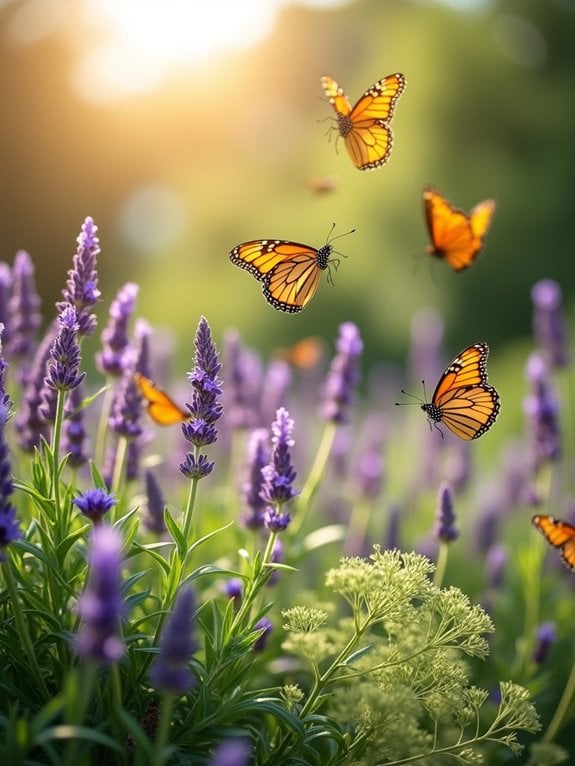
Beyond flowering plants, fragrant herbs add a wonderful dimension to your butterfly garden. You'll love watching butterflies visit herbs like lavender, fennel, dill, and mint, which provide both nectar and places for them to lay their eggs. Plant these aromatic treasures in sunny spots where you can easily access them for your own cooking too!
Don't forget to include parsley and lemon balm, which attract swallowtail butterflies in particular. These versatile herbs don't just smell amazing - they'll help create a thriving ecosystem in your garden while giving you fresh ingredients for your kitchen. It's truly a win-win situation!
Design a Butterfly-Shaped Garden Layout

Creating a butterfly-shaped garden layout brings magical whimsy to your outdoor space while celebrating these beautiful creatures. Start by sketching two large circles for the wings, connecting them with a narrow rectangular body and oval head. You'll want to outline your design with bricks, stones, or wooden borders to define the shape clearly.
Fill the wing sections with colorful flowering plants of varying heights, keeping taller plants toward the center. The body area works perfectly for a stepping stone path, while the head section can feature a small water feature or birdbath. Add curved pathways between plantings to mimic wing patterns.
Set Up a Butterfly Observation Area

A comfortable observation area lets you enjoy the fruits of your garden design while watching butterflies flutter and feed. Place a cozy bench or weatherproof chairs in a shaded spot, about 10-15 feet from your butterfly-attracting plants. You'll want to position yourself where you won't startle these delicate creatures.
Keep a pair of binoculars and a butterfly identification guide nearby to enhance your viewing experience. Consider adding a small side table for your morning coffee or afternoon tea, and don't forget to bring along a notebook to record the different species you spot. The perfect observation spot becomes your personal wildlife sanctuary.
Create Clusters of Single-Color Flowers

Since butterflies love bold blocks of color, planting flowers in single-color clusters will create an irresistible beacon for these beautiful visitors. You'll want to group at least five to seven plants of the same color together, creating vibrant patches that catch a butterfly's eye from above. When you're planning your garden's layout, think like a butterfly seeking nectar - they're drawn to big, bold statements!
- Plant purple coneflowers in groups of six, creating a stunning purple oasis that'll attract monarchs and swallowtails
- Cluster bright yellow lantanas together for a cheerful display that draws zebra longwings
- Mass deep pink zinnias in one area to welcome painted ladies and fritillaries
Maintain Chemical-Free Garden Practices

To nurture a thriving butterfly sanctuary, you'll need to completely avoid using harmful pesticides and chemical fertilizers in your garden. Instead, embrace natural solutions like companion planting, which helps control unwanted pests while attracting beneficial insects.
You can create your own organic compost using kitchen scraps and fallen leaves, providing rich nutrients for your plants. When pesky insects appear, try gentle remedies like neem oil or a solution of mild soap and water. Remember, a few nibbled leaves are worth the joy of watching butterflies dance through your garden. Your patience with natural methods will reward you with a vibrant, healthy ecosystem.
Build a Butterfly House

Building on your natural gardening practices, creating a butterfly house offers these delightful creatures a cozy shelter from rain, wind, and predators. You'll love watching butterflies flutter into their new home, especially during harsh weather conditions. When you're ready to build, choose a spot that gets morning sun but afternoon shade, and mount your house about 4-5 feet off the ground.
- Use untreated wood and create narrow vertical slits (1/2 inch wide) for easy butterfly access
- Include bark strips and small twigs inside for perching
- Position the house facing southeast to protect from prevailing winds and maximize morning warmth
Plan for Continuous Blooming Seasons

When planning your butterfly garden, maintaining a continuous succession of blooms throughout the growing season guarantees your winged visitors will always have nectar sources available.
Start with early spring bulbs like crocuses and daffodils, then shift to mid-spring flowers such as lilacs and butterfly bush. For summer, you'll want zinnias, purple coneflowers, and black-eyed Susans. Don't forget to include late-blooming plants like asters and sedum for fall nectar sources. By staggering your plantings and choosing varieties with different bloom times, you'll create a welcoming habitat that keeps butterflies returning to your garden month after month.
Add Night-Blooming Plants for Moths

Did you know that moths need a butterfly garden just as much as their daytime cousins? These wonderful nighttime pollinators deserve a special place in your garden, and you'll love watching them flutter about in the evening hours. By adding night-blooming plants, you're creating a 24-hour paradise for all winged visitors.
- Plant moonflowers and evening primrose, which open their fragrant blooms at dusk
- Include white-colored flowers like jasmine and nicotiana that reflect moonlight
- Create cozy resting spots with native ornamental grasses where moths can hide during the day
Your garden will transform into a magical nighttime haven, supporting these essential pollinators while adding another dimension to your outdoor space.
Incorporate Vertical Garden Elements

Taking your butterfly garden to new heights with vertical elements lets you maximize space while creating stunning visual interest for both you and your winged visitors. Install trellises and arbors where climbing plants like morning glories and trumpet vines can flourish, providing natural perches for butterflies to rest and feed.
You'll love watching butterflies float upward as they explore tall flowering plants like hollyhocks and delphinium. Consider mounting window boxes at different heights, or create a living wall with pocket planters filled with butterfly-friendly flowers. Don't forget to include vertical supports for vining plants that butterflies adore, such as passion flower and clematis.
Design Wide Garden Paths

Three to four-foot-wide paths serve as essential features in your butterfly garden, creating comfortable spaces for both you and your fluttering friends to move freely. When you design these paths, you'll want to make sure they're welcoming and practical, allowing you to maintain your garden while enjoying the magical sights of butterflies dancing from flower to flower.
- Use smooth, level materials like decomposed granite or flat stepping stones to create safe, accessible pathways
- Curve your paths gently through the garden to create a sense of discovery and natural flow
- Leave enough space between plants and paths to prevent overcrowding and allow butterflies to land safely
Mix Annual and Perennial Butterfly Plants

As you establish your butterfly-friendly pathways, let's explore the beautiful combination of annual and perennial plants that'll transform your garden into a year-round haven. You'll want to include annuals like zinnias, cosmos, and marigolds for quick-blooming color throughout summer, while perennials such as coneflowers, butterfly bush, and black-eyed susans provide reliable beauty year after year.
Mix these plants strategically, placing taller perennials toward the back and shorter annuals in front. This dynamic combination guarantees you'll have continuous nectar sources for butterflies, even as seasons change. Plus, you'll enjoy endless waves of vibrant colors in your garden.
Keep reading
Need personal guidance?
Talk to an advisor
Our care experts are here to help you make the right choice — for free.